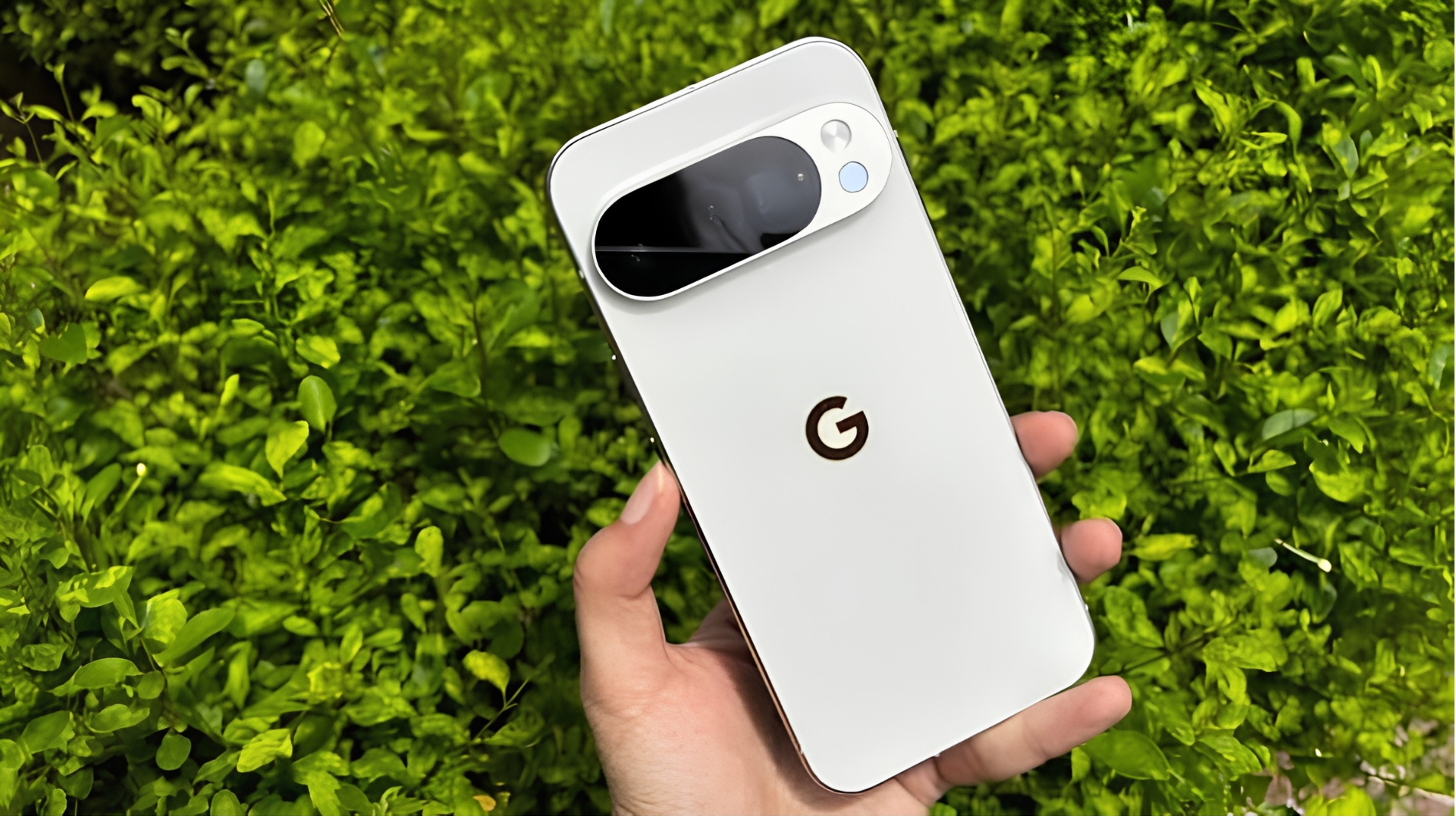
The next billion-dollar shift in smartphone technology isn't about better cameras or sleeker designs.
It is about shrinking cloud-level artificial intelligence to fit securely in your pocket.
When the Google Pixel 11 officially arrives on August 12, it won't just be another hardware update for tech enthusiasts.
It represents a massive strategic pivot for Google, signaling the end of cloud-dependent mobile AI and the beginning of true on-device intelligence.
For business leaders, enterprise security teams, and competitors like Apple and Samsung, the rules of the mobile ecosystem are about to fundamentally change.
The battle for enterprise customers is no longer fought in inboxes. It is fought on the edge, powered by silicon that outpaces the cloud.
On August 12, Google is expected to unveil a device that bridges the gap between consumer hardware and enterprise-grade computing.
At the heart of the Google Pixel 11 is the rumored Tensor G6 chipset, completely redesigned and manufactured by TSMC on an ultra-efficient 2-nanometer process.
This isn't just a slight bump in speed.
Early supply chain indicators suggest the device will feature up to 16GB of RAM as a standard baseline, a necessity for running large language models (LLMs) locally.
Historically, mobile AI required sending voice prompts, text, and data back to massive server farms run by Amazon, Microsoft, or Google Cloud.
The Google Pixel 11 is designed to cut the cord.
By processing complex AI tasks directly on the motherboard, the device promises a 40% reduction in latency and a 100% guarantee that sensitive data never leaves the user’s hands.
Most breaking news will focus on the camera upgrades or battery life. But the real story is the B2B enterprise impact.
Corporate data security has become a $100 billion headache for Chief Information Security Officers (CISOs).
Over the last two years, major corporations have banned employees from using cloud-based AI tools like OpenAI’s ChatGPT due to fears of proprietary code and sensitive financial data leaking into public training models.
The Google Pixel 11 solves this friction point entirely.
If a device can draft emails, summarize financial PDFs, and analyze corporate spreadsheets using on-device AI, it eliminates the risk of cloud interception.
This gives Google a massive first-mover advantage in the lucrative enterprise mobility market.
Companies don't lose markets because competitors are bigger. They lose because competitors move faster to solve enterprise security bottlenecks.
If Google successfully positions this device as the ultimate "zero-trust" AI phone, it could force Fortune 500 companies to rethink their Bring Your Own Device (BYOD) policies, potentially pulling corporate market share away from Apple.
There is a hidden economic motive behind this hardware launch.
Generative AI is notoriously expensive to run. Every time a user asks a cloud-based AI a question, it costs companies fractions of a cent in server compute.
Multiplied by 2 billion smartphone users globally, cloud AI inference costs are astronomical.
By offloading the compute power to the Google Pixel 11, Google is essentially crowdsourcing its AI processing costs to the consumer's hardware.
This strategy drastically improves profit margins while delivering a faster, offline-capable product to the end user.
It is a masterclass in hardware-software synergy that executives at Meta and Microsoft are watching closely as they plan their own localized AI software rollouts.
The smartphone industry has suffered from innovation stagnation for the last five years.
Consumers and businesses alike have held onto their devices longer, pushing average upgrade cycles past 36 months.
The Google Pixel 11 aims to break that cycle by making older, cloud-dependent phones feel obsolete.
Competitors are already reacting. Apple is aggressively scaling its Apple Intelligence framework, spearheaded by Tim Cook, to ensure iPhones remain the default corporate device.
Meanwhile, Samsung is partnering heavily with Qualcomm to ensure their upcoming Galaxy series can match the localized processing power Sundar Pichai and his team at Google are bringing to market.
The race isn't about who has the best hardware anymore. It's about who owns the most secure, efficient, and capable localized AI ecosystem.
The arrival of the Google Pixel 11 on August 12 is more than a product launch; it is a profound industry shift toward edge computing.
Business leaders, marketers, and technology decision-makers must recognize that the future of digital engagement will happen locally, on the device, without an internet connection.
Software applications will need to be rewritten. Marketing personalization will have to adapt to stricter, on-device privacy walls.
The companies adapting today will define tomorrow's market leaders.